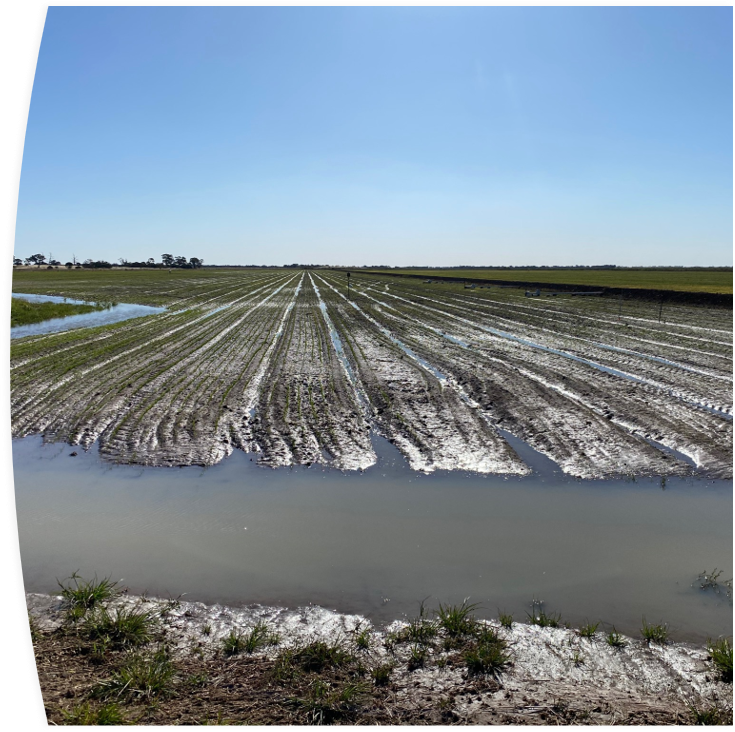
What’s different about irrigation events on Aerobic rice?
High yielding Aerobic rice is irrigated at a much reduced or lower soil water deficit compared to other crops such as cotton or corn. This has two implications which need to be considered.
Firstly, irrigation events are much quicker in duration as the soil is wetter and bays are irrigated much quicker. This is generally a positive, particularly with automation and water savings. However, experience has shown that on some soil types its important that water is held on the bays to ensure it has adequate time for infiltration to refill the profile.
Once water covers the field it needs to be held on to ensure that water infiltrates into the rootzone and the soil is brought up to saturation. We have found that this can be anywhere from 3-24hrs depending on soil infiltration characteristics. Soils with low infiltration will need longer.
While there are fancy ways to check this, a practical method is a simple push probe rod or long screw-driver to ensure water has saturated to depth.
Selecting Irrigation layouts for Aerobic Rice
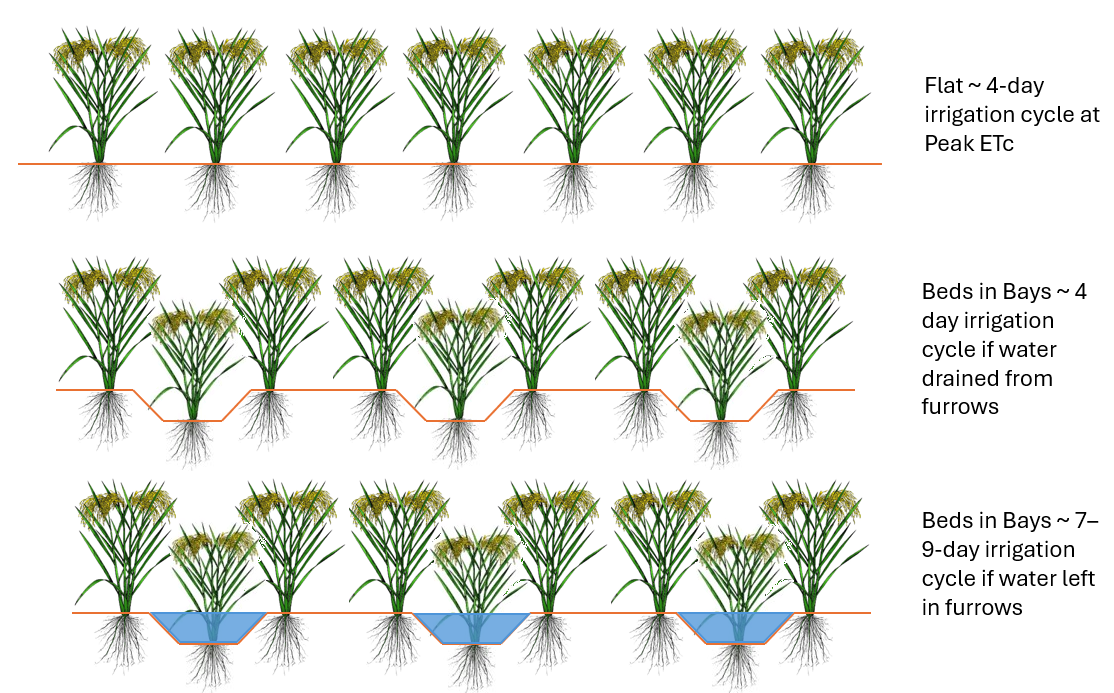
Irrigation layouts play a major role in the success of aerobic rice. Our research has looked at two options for configurations in irrigation bays for growing aerobic rice. These have been on the ‘Flat’ where aerobic rice is grown on a flat bay configuration and on ‘Beds in Bays’ where aerobic rice is grown on beds and furrows within the bay.
Flat bays: Aerobic rice grown on flat bays has been the initial approach used for growing aerobic rice. In these situations, no change to the bays are implemented. In this option bays are irrigated traditionally and water removed from the bay after irrigation similar to a cotton or corn crop. Under these conditions we have found that during peak evapotranspiration periods the rice crop will need to be irrigated on ~4 day intervals to ensure that sufficient moisture is available to meet crop evapotranspiration needs and the crop is not stressed.
‘Beds in Bays’: Growing aerobic rice with beds in Bays requires bed forming on the bays. This practice is common with other summer crops such as cotton and corn. This practice we have found has number of advantages. Establishment is better, particularly with wet season starts, bays water quicker and more uniform and options for irrigation management are greater ie. Holding water in furrow between irrigations. Using Beds in Bays irrigation intervals are ~4 days when water is fully drained off the bay after each irrigation. Alternatively, we have found leaving water in furrow after each irrigation can extend the irrigation interval out to 7-9 days at peak evapotranspiration times.
Deciding when to Irrigate with Aerobic Rice
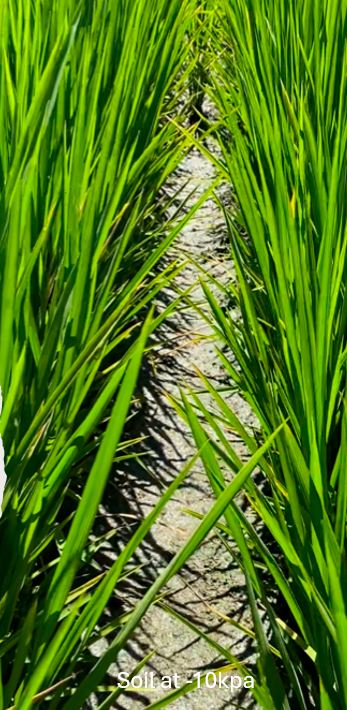
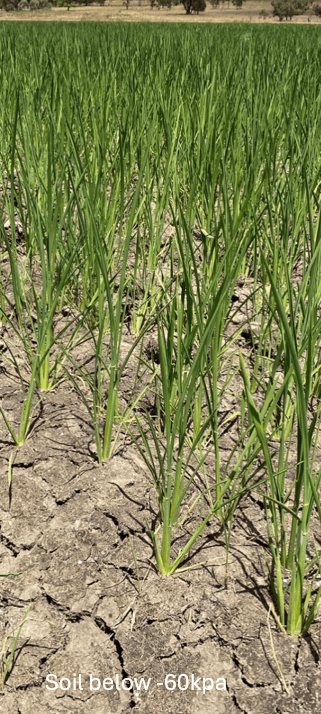
For maximizing yield in aerobic situations, we recommend not drying the soil below -15kpa in the rootzone from late tillering onwards. Drying of soil to -50 to -60 kpa for trafficability operations during early tillering can be practiced, which will cause associated delays with PI. The goal of growing Deakin’s high yielding aerobic rice is not to create a competition to see how far the soil can be dried, rather to maximise yield with the lowest possible water use.
To achieve this soil tension sensors can be used to directly measure or alternatively very simple observational techniques. Using the observational techniques involves simply looking and walking on the soil surface. We find that once the soil surface is just dry enough to walk on without mud sticking to your boots then irrigation should be initiated. In these situations, 10cm soil tensions are generally below -10 kpa and we are just starting to see movement on 15cm soil tension sensors, indicating irrigation should occur.
Automation for Aerobic Rice
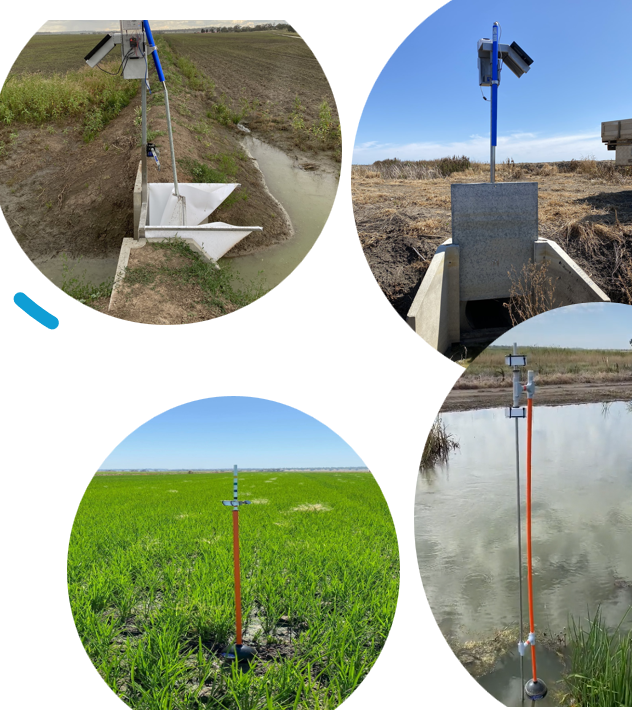
Aerobic rice and Automation are made for each other. When growing aerobic rice automation takes care of any increases in labour associated with irrigation management. All of the Deakin high yielding aerobic rice has been grown using Deakin’s on-farm automation approaches which use off the shelf automation components which can be purchased by the grower and constructed.
Options are available for both undershot (slide gates/outlets) or overshot (Tarp gates/outlets) depending on grower preference and budget.
These automated gates can also be linked to smart float sensors which can be used to trigger gate operations i.e. opening closing based on water position and/or depth in the field.
For further information including how to guides on rice irrigation automation please visit
 Deakin